A restaurant today pays to be fragmented. A platform takes 25–30 % of every delivery. The till is rented by the month. Bookings run through another tool. Reviews live somewhere else. And digital tax records are now the standard, not the exception. In the end the owner rents five services that don’t talk to each other — and owns none of them.
The real cost isn’t the subscription
It’s the scattering. Each tool keeps a slice of your data: the platform knows your customers, you don’t. The till has your takings but not your bookings. Nothing is connected, so nothing can be steered. You work for your tools instead of them working for you.
And the heaviest line is invisible: platform commission. On a delivered order, a third is gone before you’ve even paid for the ingredients. Across a full service, that’s a wage a month, evaporating.
The simple idea: connected tools
Bring the essentials together on your restaurant’s website. Subscription and purchase are different options, with ownership defined in the chosen contract:
- Ordering (dine-in, takeaway, delivery) runs from your own website, with no platform commission. Your customers become yours again.
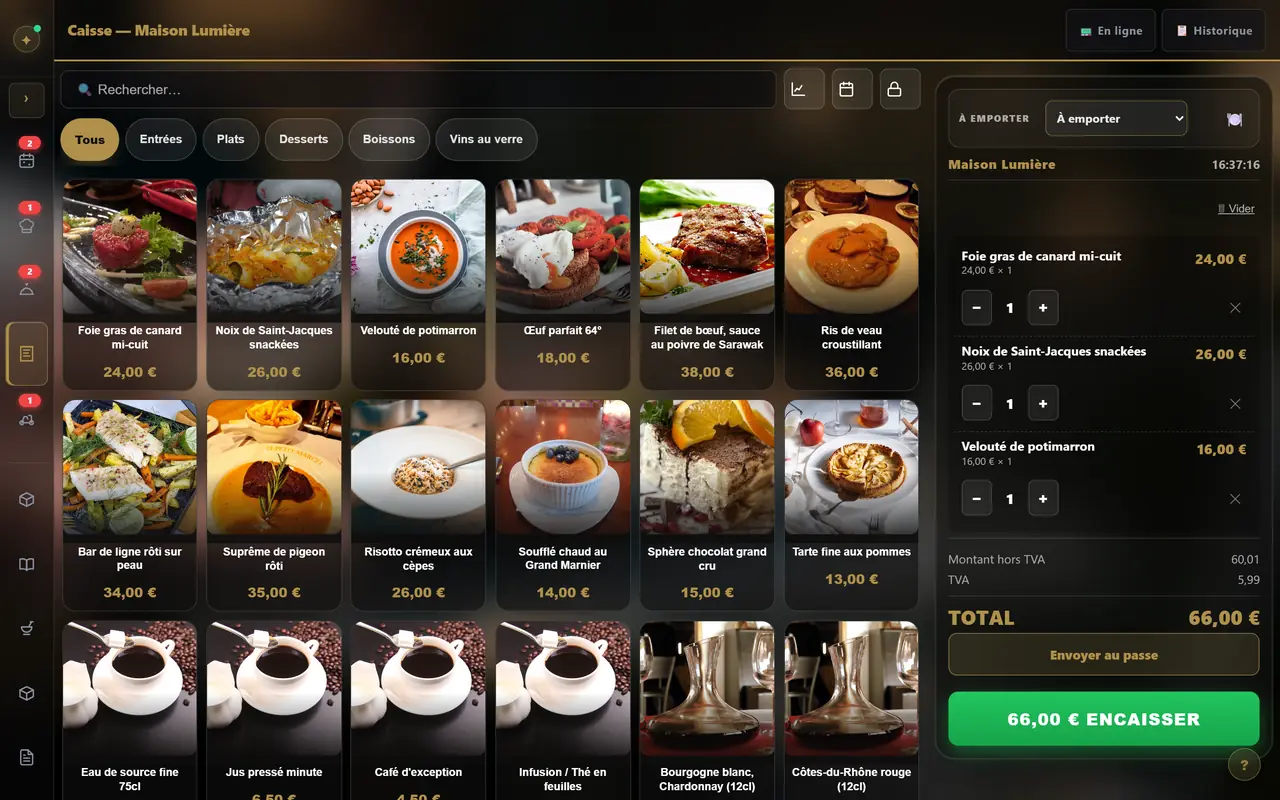
- The till takes payment at the table, item by item, and everything files itself — no loose receipts, no keying errors.
- Bookings are centralised: the request lands in the till, a table is assigned and the floor team knows who is coming.
It all speaks with one voice: what you take, what you book, what you sell online — a single dashboard.
Digital records and invoicing: check the whole process
In the UK, Making Tax Digital for VAT requires compatible software for digital VAT records and returns. HMRC also allows bridging software to connect spreadsheets. A till that records sales is not, on its own, proof that VAT returns can be submitted. Check the complete workflow with your accountant and the HMRC software guidance.
The practical aim is to keep sales and records connected, with the right export or integration for the software your accountant uses.
What it actually changes
- You keep your margin (0 commission on your own orders).
- You keep your customers (their details are yours, not a platform’s).
- You keep a clear sales record for the accounting workflow agreed with your accountant.
- You steer instead of react (one place, clean figures for your accountant).
A restaurant doesn’t need ten tools. It needs a connected system — that takes payment, keeps clean tax records, handles orders and bookings — and lets it focus on the kitchen and the floor.
That’s exactly what we build: a website that feels like an app, with the till and invoicing built in, in the restaurant’s own colours. Available by subscription or purchase, under the conditions of the chosen offer.